The charge of a fully powered battery can drop dramatically in cold weather. This means that a reassuring charge indicator at the trailhead may fall precipitously after a few shots, in large part due to the temperature of the camera's batteries having dropped dramatically. It can also create confusion as to whether the problem is due to a loose cell, or a general lack of charge, or indeed whether there is a healthy reserve of power that is being used up prematurely as the battery warms up.
By switching to a different battery system before the first shot, and then changing again as the day unfolds, the best approach to dealing with cold weather for photography is to treat cold weather as a power constraint, and organize spare batteries in advance of need. Packing is not just cosmetics.
The first change: treat cold as a power constraint
One of the initial adjustments to take to winter photography is to stop treating all batteries as if they were interchangeable. A battery in your camera, another in an outside pocket and a third in a cold side pouch (e.g. in the side of your snowboard bag) might all read "100%" but be very different power-wise once cold.
Remember that cold can apparently make batteries run out of power much sooner than they really will. But don't count on a apparently dead battery coming back to life when it warms up. Treat the coldest battery as if it were a spare until it has had a chance to come up to moderate temperatures. Keep the active battery warm.
At first glance the battery in your camera, spare batteries in your pocket and side pouches all look the same. Once you read the maker's guidance for your particular batteries in your particular camera(s), however, you realize that although they look identical to you, different systems use different approaches to handle low temperatures, to charge and to display various power messages. The maker's guidance becomes your #1 field guide, so follow it.
Build a two-zone system before leaving shelter
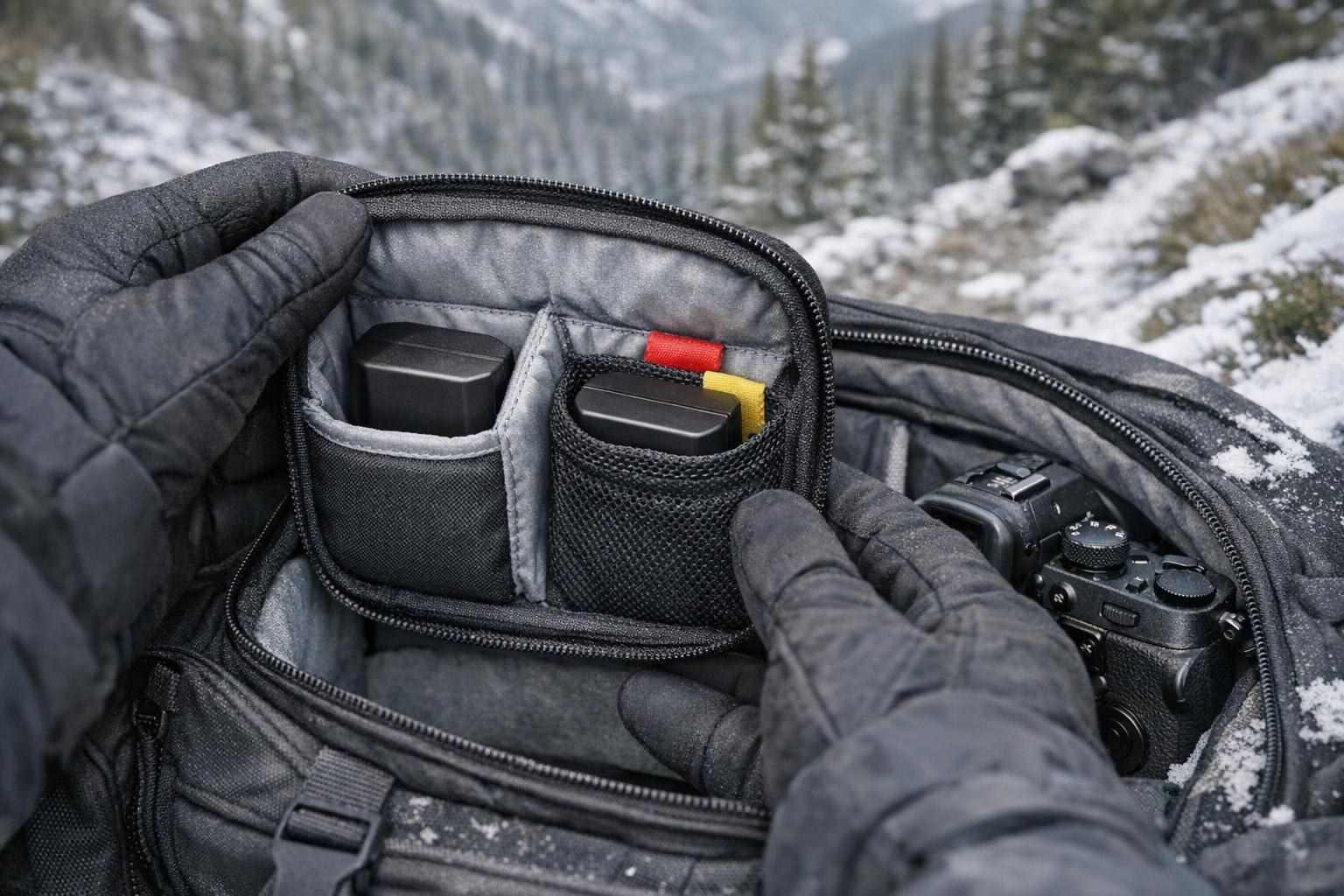
The next point where you can turn battery power into a shooting strategy is with how you pack the batteries for your shoot. Rather than stashing all of your spare batteries in one big pocket or bag, organize them into two zones: the active zone (where the batteries that you are currently using for your camera are stored) and the protected zone (where fully charged spares are stored).
Put your active batteries in an easily accessed inside pocket or in an insulated pouch within easy reach, separate from your memory cards, loose metal objects and other small field tools. The reserve of fully charged batteries are to be kept warm and left untouched in the protected area of your pack until your active batteries actually run down.
Organizing spare batteries into separate inner pockets rather than one large outer pocket is key. There should be a clear status flag for each battery in each compartment i.e. ready, in use, or dead. Use a length of removable tape (striped if possible) stuck into a corner of a compartment, a small card or even just orientate the battery a different way each time. Make it obvious to read.
Keep charged batteries in a location where no condensation can form around the contacts. A sealed bag is best when traveling between extreme temperatures, but be careful not to open and close the bag too often while still in the cold moist air. In addition, always try to keep the battery's covers and protective caps in place when a battery is outside of the camera.
Protect the reserve instead of chasing the warning light
The warmest spare battery in your camera bag is best stored inside your clothing next to your body. Storing your batteries in your camera pouch on your exterior will not keep them warm as you will be relying on your car to heat them up and thus sweating them before you can get back to your vehicle and charge them. The chances of dropping your camera and then your spare batteries with potentially damaging them are high too. Use your clothing to store your spare batteries instead.
In this case the organization of the batteries in the various pockets of your bags and outdoor gear will also turn out to be part of your photography gear for the shoot. The batteries will be in the inside of your jacket, in an easily accessible inner pocket of your coat.
This just means storing your charged batteries away from your spent ones. This is best done in separate pockets or locations, and when in dark locations the best way to denote a 'depleted' battery is to turn it upside down in the pouch. Never place a used battery back in the charged location of a pouch or pocket in the hope that the camera will 'come back to life' after a short period.
When the first swap changes the day's rhythm
The first change of batteries is a critical point in time. If the camera's power drops suddenly, goes slowly, or even switches off completely, the taken away battery must be put into the warm marked reserve container. Do not assume that this battery is empty for good, but check it again for power after some time has passed and it has returned to a moderate temperature.
Use the time your subject is relighting or repositioning you to swap batteries – every time you move location or change shot, your warm reserve is getting closer to the time it can be used. This is especially true on documentary assignments where you shoot a lot of natural material and then a very short, highly structured sequence – you don't want to be in the midst of that and realize you've run out of power.
Review footage, turn off wireless functions on receivers and other components, and switch off the camera when not in use. This also helps to avoid wasting power when a shot cannot be re-shot. Use the camera's power-saving functions where appropriate and make sure that they do not interfere with functions such as focus, shooting time, etc.
Make spare batteries part of the shooting plan
It's also strategic in terms of planning for your visual needs for the assignment. A short walk to a location that's already in sight of the shoot location may mean shooting with a lighter setup of batteries. A remote documentary shoot location with no return to shelter for hours may mean additional reserve batteries and very careful checking of all your batteries before you leave.
Note whether any of your spare batteries are fully charged before you leave the shelter. Mark those that are not in a way that is obvious before you are in a hurry. When a battery is in doubt put it in your worst spare slot, and take it out of your reserve of best spares.
Carry your charging solution for the batteries only if it fits into your pack for the rest of your trip, is protected from the weather, and has enough power to fully recharge your batteries. Do not assume that you can plug into a vehicle, a portable power bank, or a power outlet in your shelter. Verify this before you set out.
End the shoot with a reset, not a pile of loose cells
The next phase, after you have finished taking photos, is to allow your equipment to return to its normal environment. Recharge any batteries that still have some power left in them. Allow warm batteries to return to room temperature. Store dead batteries away from your spare batteries.
When taking the batteries back to your shelter, try to allow them to return to room temperature gradually and according to the manufacturer's instructions. When you get a chance to sit down and reflect on the shoot, try to record what happened to each of your batteries. Which ones had been running low when you switched to a spare? Did you keep the spares warm? Did the camera behave any differently after you had changed batteries?
Thus, simple is better. Mark your batteries with clear status indicators; keep your reserves protected; make sure your spare(s) are easily accessible; and, handle the first low power warning with the care that it warrants. This, not to get lost in your shooting's technology, so that you might more observe and shoot your subject, as well as all the light and details that compose your scene and tell your story.